Screens
Finance
The Finance page shows where money comes from and where it goes, how long your cash lasts, and holds bank loans, insurance and every transaction.
Finance is your company's bank statement and accountant in one page. Open it whenever you wonder whether you can afford something, or why the cash went down. Open it from Finance in the top menu; its drop-down has two pages: Finance and Exchange (see The exchange).
The six tiles
- MRR: what all your customers pay per month.
- Monthly costs: rent, salaries, licenses, building costs, marketing and loan installments, per month. The cash forecast on Overview breaks it down by kind.
- Net per month: MRR minus costs. Green means you earn more than you spend.
- Debt: what you still owe the bank.
- Hardware value: everything you own at book value.
- Company value: what your whole company is worth (see The exchange).
Under them, one line tells you how long your cash lasts at today's pace, or that revenue already covers your costs.
Cash flow
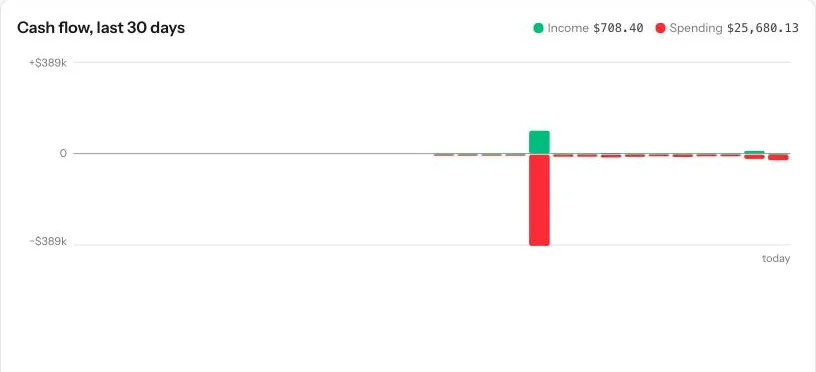
A bar chart of money in (green) and money out (red), day by day for the last 30 days, or week by week for a year with Premium. Tall red bars are big purchases; a steady row of small red bars is your running costs.
Spending by category
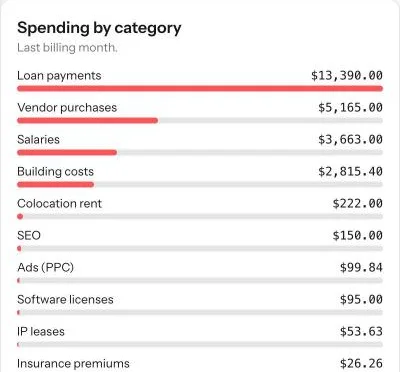
Where last month's money went, biggest first: loan payments, vendor purchases, salaries, building costs, rent, marketing, licenses, IP leases, insurance and more. This is the first place to look when costs feel too high.
Bank loan
The bank lends against what your customers pay you, not against how big you are. The panel shows how much you may borrow right now, the terms, the daily installment and the total interest. If you cannot borrow yet, it lists what is missing. See Loans.
Your loans are listed below with what is left, the next installment and a button to pay off early.
Hardware insurance
Pick a plan to insure the hardware you own against fire, flood and theft. The panel shows your insured value, what each plan costs and when claims start being paid. Losses and payouts are listed underneath. See Insurance.
Transactions
Every single money movement, newest first: when, what, which category, the amount and your balance after it. Small hourly charges of the same kind are grouped into one line so the list stays readable. Use Older and Newer to page through.
Tip: When cash drops faster than expected, check Spending by category first, then the transactions of that category.
Common mistakes
- Looking only at cash: a big number can still be shrinking every day. Watch Net per month.
- Taking a loan with no plan to pay the daily installment.
- Letting insurance lapse by running out of cash: the policy is cancelled.
Want the numbers? The full rules: Insurance and bank loans